A Ciência Por Trás da Compatibilidade de Relacionamentos


DNA Romance predicts "Chemistry" online using the DRom 1.0 algorithm. Este algoritmo avalia 100 marcadores específicos dentro do seu DNA, focando em genes comprovadamente envolvidos na atração e reprodução. Estudos mostraram que pessoas com marcadores de DNA variados no Complexo Principal de Histocompatibilidade (MHC) tendem a achar o cheiro umas das outras atraente e frequentemente desfrutam de relacionamentos românticos mais duradouros..

DRom 1.0 prevê química e parentes incompatíveis
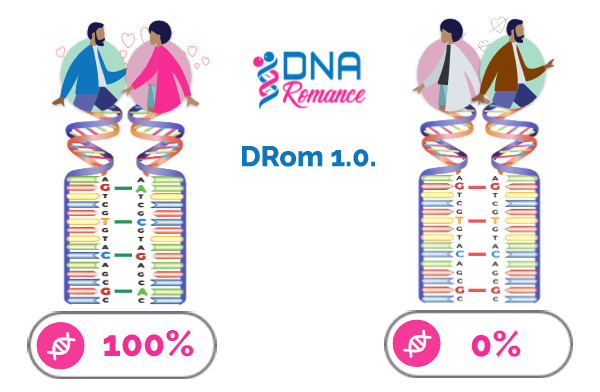
DNA Rmance DRom1.0 Predicts Chemistry


DNA Romance também prevê 'compatibilidade de personalidade' Usando tipos de personalidade derivados de testes psicométricos, e permite que os usuários avaliam. interesses comuns compartilhados usando filtros, e atração física com base nas fotografias do seu jogo. Romance de DNA second genetic algorithm DRom 2.0 usa um modelo de IA treinado com marcadores de DNA relevantes para prever fenotípicostraços com alta precisão. DRom 2.0 complementa o DNA Romance mecanismo de verificação de perfil que apresenta várias camadas de verificações que ajudam a indicar melhor o usuárioautenticidade do perfil,


classificação de compatibilidade de personalidade

Como os diferentes tipos de personalidade interagem nos relacionamentos

Explore nossos Classificação de compatibilidade de personalidade inspirado pelos renomados 16 tipos de personalidade de Jung/Myers-Briggs. Desenvolvido há mais de um século pelo psiquiatra suíço Dr. Carl Jung e posteriormente refinado por Isabel Briggs Myers e Katherine Briggs, este teste psicométrico resistiu ao teste do tempo. Reconhecido como o Indicador de Tipo Myers-Briggs®, é amplamente utilizado na psicologia organizacional.
O DNA Romance utiliza este algoritmo de compatibilidade de personalidade para prever potenciais conexões entre solteiros e casais. Os algoritmos do DNA Romance atribuem estrategicamente pontuações de compatibilidade mais altas a tipos de personalidade semelhantes e pontuações mais baixas àqueles que podem entrar em conflito..
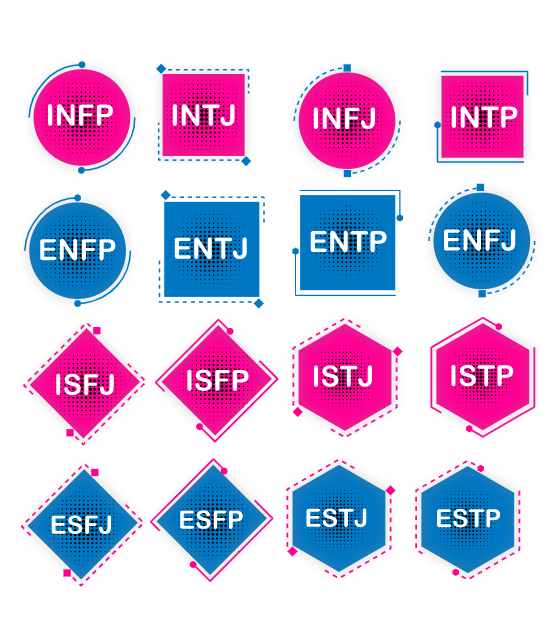
DNA Romance personality compatibility score

Principais trabalhos de pesquisa

DNA online dating site

Atração baseada em MHC (também conhecida como Química) e escolha de relacionamento

DNA Romance predicts "Chemistry" using DRom 1.0, an algorithm that analyses Single Nucleotide Polymorphisms (SNPs)confirmed to influence relationship choice in several independent studies. Here we present just a few of the research papers we evaluated in order to develop DRom 1.0 .

Birnbaum GE, Zholtack K, Mizrahi M & Ein-Dor T (2019) A Pílula Amarga: Cessação de Contraceptivos Orais aumenta o apelo dos companheiros alternativo Evolutionary Psychological Science volume 5, pages 276–285

*** Contraceptivos hormonais alteram as preferências de parceiros das mulheres em direção a homens mais protetores, mas cessar o uso reverte essas preferências, aumentando a atração por homens geneticamente mais compatíveis, especialmente durante as fases de alta fertilidade, potencialmente motivando a busca por parceiros alternativos.

Wedekind C (2019) A predicted interaction between odour pleasantness and intensity provides evidence for major histocompatibility complex social signalling in women . Proc. R. Soc. B 285:20172714.

*** O artigo descreve a conexão entre o Complexo Maior de Histocompatibilidade (MHC) e as preferências de odor em humanos, debatendo os achados anteriores e analisando como a depilação das axilas e outros fatores podem influenciar a percepção do odor corporal e sua ligação com o MHC, com uma reanálise dos dados anteriores revelando que a agradabilidade e a intensidade do odor podem interagir com a dissimilaridade do MHC na influência da comunicação social através do cheiro, implicando uma relação sutil entre MHC, percepção de odor e comunicação social.

Wu K, Chen C, Moyzis RK, Nuno M, Yu Z and Greenberger E (2018) More than skin deep: Major histocompatibility complex (MHC)-based attraction among Asian American speed-daters Evolution and Human Behavior. 39(4):447-456.

*** Em um contexto de speed-dating, as mulheres, mas não os homens, mostraram preferências por parceiros com base na complementaridade do Complexo de Histocompatibilidade Maior (MHC) através da análise de SNPs, com diferentes SNPs influenciando a atração de forma direcional com base na proximidade aos principais genes HLA, e índices baseados no MHC tiveram influência comparável aos atributos de personalidade auto-relatados na previsão de ofertas de segunda data para ambos os sexos.

Henningsson S, Hovey D, Vass K, Walum H, Sandnabba K, Santtila P, Jern P, Westberg L (2017) A missense polymorphism in the putative pheromone receptor gene VN1R1 is associated with sociosexual behavior . Transl Psychiatry. 7(4):e1102.

*** O estudo encontra uma associação significativa entre um polimorfismo no gene VN1R1, relacionado ao receptor tipo-1 vomeronasal humano (parte do sistema mediando os efeitos dos feromônios), e o comportamento sociosssexual em mulheres, particularmente relacionado a encontros de uma noite, sugerindo que a quimiosinalização possa desempenhar um papel na modulação das interações sociais humanas.

Sherlock JM, Sidari MJ, Harris EA, Barlow FK, Zietsch BP (2016) Testing the mate-choice hypothesis of the female orgasm: disentangling traits and behaviours . Socioaffect Neurosci Psychol. 6:31562.

*** O estudo sugere que as mulheres experimentam frequências de orgasmo variadas com diferentes parceiros, com aqueles que induzem taxas de orgasmo mais altas sendo percebidos como mais engraçados, criativos, quentes, fiéis e melhor cheirosos, e também sendo mais atentos à satisfação sexual de seu parceiro, parcialmente apoiando a hipótese de escolha de parceiro do orgasmo feminino, que o posiciona como um mecanismo potencial para selecionar parceiros de alta qualidade.

Kromer J, Hummel T, Pietrowski D, Giani AS, Sauter J, Ehninger G, Schmidt AH, Croy I (2016) Influence of HLA on human partnership and sexual satisfaction . Sci Rep. 6:32550.

*** Um estudo indica que em humanos, a dissimilaridade HLA (um componente genético do sistema imunológico) pode influenciar a seleção de parceiros e a satisfação sexual, potencialmente através da detecção de pistas olfativas relacionadas à compatibilidade genética, de forma semelhante a mecanismos observados em outros animais, promovendo diversidade genética e resistência a patógenos nos descendentes.

Wlodarski R. and Dunbar RIM. (2015) What’s in a Kiss? The Effect of Romantic Kissing on Mate Desirability . Evol Psychol. ; 12(1): 178–199.

*** Este estudo descobriu que a percepção da habilidade de beijar românticamente afeta avaliações de potenciais parceiros, aumentando a desejabilidade especialmente para mulheres em contextos de sexo casual, e, enquanto as pistas visuais podem anular o impacto das informações relacionadas ao beijo em certos cenários de acasalamento, a influência da informação visual atraente parece ser mais potente para homens do que para mulheres, aludindo ao papel multifacetado do beijo na comunicação da qualidade e desejabilidade do parceiro, além de outras pistas.

Christakis NA and Fowler JH (2014) Amizade e seleção natural PNAS. 11:10796–10801.

*** O estudo demonstra que os seres humanos tendem a formar amizades com indivíduos que possuem genótipos semelhantes - semelhantes ao nível de quarto primos - em todo o genoma, e enquanto certos genótipos são positivamente correlacionados (homofílicos), outros são negativamente correlacionados (heterofílicos) entre amigos, com conjuntos de genes específicos relacionados ao sistema olfativo e imunológico desempenhando um papel na formação de amizades, propondo que os amigos possam atuar como "parentes funcionais" e sugerindo que os genótipos homofílicos podem oferecer benefícios sinérgicos de fitness que têm influenciado a evolução humana recente.

Lie HC, Simmons LH and Rhodes G (2010) Genetic dissimilarity, genetic diversity, and mate preferences in humans . Evolution and Human Behavior 31:8–58.

*** This study explores the influence of genetic factors, particularly the major histocompatibility complex (MHC), on mate preferences in humans, discovering that males tend to prefer MHC-dissimilar females in both short-term and long-term mating contexts, while genetic diversity impacts both male and female partner preferences across different mating contexts, thus supporting a significant role for the MHC in human mate selection and suggesting that these preferences might function to enhance genetic diversity in offspring.

Lie HC, Rhodes G and Simmons LH (2010) Is genetic diversity associated with mating success in humans ? Animal Behaviour. 79, 4:903-909

*** This study indicates that in humans, particularly females, genetic diversity, especially within the major histocompatibility complex (MHC), is associated with greater mating success, measured by the number of sexual partners, supporting the concept that genetic factors, potentially related to immune system functioning, play a role in human mating success, while no significant association was found in males.

Chaix R, Cao C, and Donnelly P (2008) Is Mate Choice in Humans MHC-Dependent ? PLOS Genetics, 4 (9)

*** The study indicates that while European American populations may prefer MHC-dissimilar mates, selecting for diversity in offspring's immune systems, such a pattern is not found in the examined African population, suggesting MHC's influence on mate choice can be context-dependent and potentially shaped by various factors.

Schwensow N, Fietz J, Dausmann K, Sommer S (2008) MHC-associated mating strategies and the importance of overall genetic diversity in an obligate pair-living primate . Evol Ecol. (22) 617-636

*** The study explores mate choice in the fat-tailed dwarf lemur, finding females prefer males with greater MHC-genetic diversity and lower MHC overlap as both social and genetic fathers, while overall genetic heterozygosity and relatedness do not significantly influence mate selection; extra-pair matings might occur to mitigate genetic incompatibility, highlighting a complex interplay of "good-genes-as-heterozygosity" and "disassortative mating" hypotheses in primate mating strategies.

Wedekind C (2007) The Major Histocompatibility Complex and Perfumers’ Descriptions of Human Body Odors Evolutionary Psychology.5(2): 330-343

*** This experiment reveals a connection between the Major Histocompatibility Complex (MHC) and the verbal descriptions of human body odors, demonstrating that professional perfumers can, to some extent, articulate MHC-correlated body odor components, underscoring the MHC's influence on human olfactory perception and possibly, mate selection, given the MHC's critical role in immune system functioning and previously noted impact on body odor and mate choice.

Garver-Apgar CE, Gangestad SW, Thornill R, Miller RD and Olp JJ (2006) Major histocompatibility complex alleles, sexual responsivity, and unfaithfulness in romantic couples Psychol Sci, 17(10): 830-835.

*** In the context of romantic couples, the study finds that as the proportion of shared Major Histocompatibility Complex (MHC) alleles increases, women’s sexual responsivity to their partners decreases, while their number of extra-pair sexual partners and attraction to men other than their primary partners, especially during their fertile phase, increases, suggesting that MHC-dissimilarity might play a role in sexual attraction and partner selection, potentially driven by underlying genetic and reproductive strategies to enhance offspring immunocompetence by maintaining genetic diversity.

Roberts CE, Gosling LM, Carter V and Petrie M (2006) MHC-correlated odour preferences in humans and the use of oral contraceptives Proc. R. Soc. B 275, 2715–2722

*** This study investigates how oral contraceptives influence women's preferences for certain male odours, which are known to be influenced by genes in the Major Histocompatibility Complex (MHC). Previous research has indicated that female preference for MHC-dissimilar male odour may function to increase offspring heterozygosity or minimize inbreeding. Interestingly, it has also been suggested that women using oral contraceptives tend to prefer the scent of MHC-similar males, which runs contrary to this logic. The study utilized a longitudinal design to test women before and after initiating contraceptive pill use, comparing their preferences to a control group of non-pill users. While the study didn’t find a significant difference in ratings between odours of MHC-dissimilar and MHC-similar men during the follicular cycle phase in general, it did unearth that single women tended to prefer the odour of MHC-similar men, whereas women in relationships leaned towards the odour of MHC-dissimilar men. This latter finding aligns.

Wedekind C (2006) The Intensity of Human Body Odors and the MHC: Should We Expect A Link ? Evolutionary Psychology. 4:85-94

*** This research discerns relationships between a few MHC (Major Histocompatibility Complex) genes and the intensity and pleasantness of men's body odors, discovering that men with at least one homozygous MHC antigen don't emit notably more intense odors than heterozygotes, yet their scents are perceived as significantly stronger by women with dissimilar MHC.

Pause BM, Krauel K, Schrader C, Sojka B, Westphal E, Mu¨ller-Ruchholtz W, and Ferstl R. (2006) The human brain is a detector of chemosensorily transmitted HLA-class I-similarity in same- and opposite-sex relations Proc. R. Soc. B (2006) 273, 471–478 doi:10.1098/rspb.2005.3342

*** This study reveals that humans subconsciously detect and respond to body odors from individuals with similar HLA (Human Leucocyte Antigen) genetic markers, which might play a critical role in social interactions and mate selection by acting as subtle social signals within both same-sex and opposite-sex relationships..

Martins Y, Preti G, Crabtree CR, Runyan T, Vainius AA and Wysocki CJ (2005) Preference for Human Body Odors Is Influenced by Gender and Sexual Orientation . Psychological Science, 16(9) 694-702

*** This study demonstrates that sexual orientation and gender influence individuals' preferences for human body odors, with heterosexual and homosexual males and females showcasing distinct two-choice preferences when presented with body odors from individuals of different gender and sexual orientation combinations, implying that body odor can be a factor in sexual and social partner selection.

Horton R, Wilming L, Rand V, Lovering RC, Bruford EA, Khodiyar VK, Lush MJ, Povey S, Talbot CC Jr, Wright MW, Wain HM, Trowsdale J, Ziegler A, Beck S (2004) Gene map of the extended human MHC. Nat Rev Genet 5(12):889-899

*** This study characterises an integrated gene map of the extended human MHC, a pivotal region in the vertebrate genome for infection and autoimmunity due to its essential role in both adaptive and innate immunity, highlighting its significant content related to paralogy, polymorphism, immune functionality, and its association with various diseases, providing a comprehensive view stemming from the assimilation of data from several large-scale studies..

Jacob S, McClitock MK, Zelano B and Ober C (2002) Paternally inherited HLA alleles are associated with woman’s choice of male odour . Nature Genetics, 30:175

*** This study demonstrates that women can discern differences in male body odor influenced by a single variance in HLA (human MHC) allele, with a woman's capacity to distinguish and prefer certain odors notably being based on HLA alleles inherited from her father and not her mother; this suggests that paternally inherited HLA-associated odors influence odor preference and might function as social cues, even despite a milieu of potential odors derived from a variety of genetic and cultural factors..

Milinski M and Wedekind C (2001) Evidence for MHC-correlated perfume preference in humans . Behavioural Ecology 12(2):140-149

*** The study explores the relationship between Major Histocompatibility Complex (MHC) genotypes and perfume preferences in humans. They discovered a notable correlation between an individual's MHC (specifically HLA-A, -B, -DR) and their ratings of various scents for personal use, with certain HLA types (e.g., HLA-A2) showing consistent scent preferences. However, when it came to preferences for a partner's scent, the correlation was largely insignificant, aligning with the hypothesis that individuals select perfumes for personal use to possibly enhance or amplify their own immunogenetic revealing body odors, rather than to alter the perceived scents of their partners.

Wedekind C, Seebeck T, Bettens F And Paepke AJ (1995) MHC-dependent mate preferences in humans. Proc.R.Soc.Lond.B. 260:245-249.

*** This study found that people tend to prefer the body odors of potential mates who have different immune system genes than their own, but this preference changes for women on birth control.

Genetic online dating site

How similarities or differences in MHC alleles can influence family planning

MHC similarity between couples is known to cause issues with family planning, here are some of the peer-reviewed papers describing the role of MHC similarity and human reproduction .

* found that sperm viability was associated with partners' HLA dissimilarity, indicating that cervical mucus may selectively facilitate later gamete fusion between immunogenetically compatible partners .

Jokiniemi A, Magris M, Ritari J, Kuusipalo L, Lundgren T, Partanen J and Kekäläinen J (2020) Post-copulatory genetic matchmaking: HLA-dependent effects of cervical mucus on human sperm function Proc Biol Sci., doi: 10.1098/rspb.2020.1682. Epub 2020 Aug 19.

* found an increased frequency of homozygosity for HLA-E*0101 in Egyptian women with RM

Mosaad YM, Abdel-Dayem Y, El-Deek BS and El-Sherbini SM (2011) Association between HLA-E *0101 homozygosity and recurrent miscarriage in Egyptian women . Scand J Immunol. 2011 Aug;74(2):205-9. doi: 10.1111/j.1365-3083.2011.02559.x.

* proposed a genetic-risk calculation that could predict recurrent miscarriage (RM) based on analysing HLA haplotypes from couples either with histories of successful pregnancies or RM .

Mora-Sánchez A, Aguilar-Salvador D, Nowak I (2019) Towards a gamete matching platform: using immunogenetics and artificial intelligence to predict recurrent miscarriage NPJ Digit Med Mar 7;2:12. doi: 10.1038/s41746-019-0089-x

* performed a meta-analyses of 41 studies and showed that HLA-B sharing and HLA-DR sharing were both associated with the occurrence of RM .

Meuleman T, Lashley LE, Dekkers OM, van Lith J, Claas FH and Bloemenkamp KW (2015) HLA associations and HLA sharing in recurrent miscarriage: A systematic review and meta-analysis Hum Immunol. May;76(5):362-73. doi: 10.1016/j.humimm.2015.02.004.

* identified differential association of alleles in HLA-A, HLA-B, HLA-C, and HLA-DRB1 when compared with reported world RSA patients .

Shankarkumar U, Pawar A, Gaonkar P, Parasannavar D, Salvi V, and Ghosh K (2008) HLA allele associations in idiopathic recurrent spontaneous abortion patients from India J Hum Reprod Sci. 2008 Jan;1(1):19-24. doi: 10.4103/0974-1208.39592.

* describe the relationship between HLA similarity at individual alleles, as well as HLA haplotypes as indicators for increased risk of fetal loss among Hutterite couples .

Ober C (1999) Studies of HLA, fertility and mate choice in a human isolate . Hum Reprod Update 5(2):103-107.

* results of a 10 year study that demonstrated increased fetal loss rates among Hutterite couples matching for HLA antigens .

Ober C, Hyslop T, Elias S, Weitkamp LR, Hauck WW (1998) Human leukocyte antigen matching and fetal loss: results of a 10 year prospective study Human Reproduction, Volume 13, Issue 1, Jan 1998, Pages 33–38

* demonstrated increased rates of recurrent spontaneous abortion among Hutterite couples matching for HLA-DQA1 alleles

Ober., Steck., Ven., Billstrand., Messer., Kwak., Beaman., Beer (1993) MHC class II compatibility in aborted fetuses and term infants of couples with recurrent spontaneous abortion Journal of Reproductive Immunology, Volume 25, Issue 3, December 1993, Pages 195-207

Personality online dating site

teste de personalidade gratuito aqui

Our personality compatibility rating is based on the Myers-Briggs 16 personality types. This test has a long history with the development of the first 3 components dating back almost 100 years to Dr. Carl Jung and today the 4 letters and 16 personality type groups are widely known to the majority of people. DNA Romance's personality compatibility algorithm, called PC1, puts maximum weight on similar personality types and less weight towards personality types that tend to clash.

Lok C (2012) Career development: What's your type ? Nature, 488: 545-547

* The article highlights the utilization of the Myers-Briggs Type Indicator and similar personality tests in assisting scientists to enhance their soft skills and navigate their careers by providing insights into their personality traits, which can inform their communication, leadership, and teamwork strategies within professional environments.

Keirsey, D (2006) Please Understand Me II (3rd ed) . Promethius Nemesis Book Co., Del Mar, CA.

Por Favor, Entenda-me é um livro de psicologia escrito por David Keirsey e Marilyn Bates que usa um questionário auto-avaliado, o Keirsey Temperament Sorter, para categorizar indivíduos em um dos dezesseis tipos de personalidade e quatro tipos mais amplos de temperamento (Artista, Guardião, Racional e Idealista), oferecendo aos leitores insights sobre seus padrões comportamentais e valores fundamentais, enquanto se baseia e simplifica teorias psicológicas e indicadores de tipo anteriores, notavelmente o Myers-Briggs Type Indicator.

Myers IB, McCaulley MH, Quenk NL and Hammer AL (1998) MBTI manual: A guide to the development and use of the Myers-Briggs Type Indicator . Consulting Psychologists Press, Palo Alto, CA, Vol. 3.

O Manual MBTI®, terceira edição, serve como um guia abrangente, detalhando o desenvolvimento, a aplicação e a interpretação do instrumento Myers-Briggs Type Indicator® , fornecendo informações aprofundadas sobre a teoria, confiabilidade e validade da ferramenta e oferecendo insights sobre os 16 tipos de personalidade que ela identifica, todos escritos por especialistas líderes em tipo psicológico, Isabel Briggs Myers, Mary H. McCaulley, Naomi L. Quenk e Allen L. Hammer.

Myers IB, McCaulley MH and Most R (1985) Manual, a guide to the development and use of the Myers-Briggs type indicator. Consulting Psychologists Press.

The 1985 edition, 'Manual: A Guide to the Development and Use of the Myers-Briggs Type Indicator,' introduces and elucidates the Myers-Briggs Type Indicator (MBTI®), designed to render C. G. Jung's psychological type theory comprehensible and applicable in daily life, underlining the principle that behavioral variations, while seemingly sporadic, are consistently orderly, deriving from intrinsic differences in individuals’ preferred use of perception and judgment.

Myers IB (1962) Manual, a guide to the development and use of the Myers-Briggs type indicator. Consulting Psychologists Press .

O manual de 1962 para o Indicador de Tipo Myers-Briggs fornece insights e orientações abrangentes para implementar a teoria psicológica de C. Jung, afirmando que as variações comportamentais são sistemáticas e consistentes devido às preferências básicas de percepção e julgamento, visando aproveitar essas preferências por meio de auto-relatos para determinar os tipos psicológicos individuais, possibilitando assim a aplicação prática e a pesquisa de seus efeitos nas reações, motivações, valores e habilidades.

Jung CG (1923) Psychological types: or the psychology of individuation Oxford, England: Harcourt, Brace .

Tipos Psicológicos, de Carl Gustav Jung, publicado pela primeira vez em 1923, introduz a seminal teoria psicológica da tipologia, apresentando uma estrutura que busca explicar as diversas e aparentemente aleatórias diferenças na personalidade através de uma teoria sistemática e ordenada, propondo que as variações fundamentais no comportamento humano surgem devido às diferenças inerentes na forma como as pessoas preferem utilizar suas funções cognitivas de percepção e julgamento, fornecendo o embasamento para inúmeras teorias e avaliações de personalidade que viriam a seguir, notavelmente o Indicador de Tipo Myers-Briggs (MBTI).


Nós nos preocupamos com a sua privacidade e temos várias medidas em vigor para manter seus dados pessoais seguros. Seguimos as diretrizes de privacidade do HIPAA ao lidar com seus dados e não vendemos dados de DNA para terceiros! Nós criptografamos todos os dados armazenados e os nomes contêm um caminho hash exclusivo e outros elementos de ofuscação. O acesso aos dados é limitado a pessoal chave de desenvolvimento que possui autenticação de 2 fatores com acesso restrito. Você pode excluir seu perfil, incluindo dados de DNA, a qualquer momento a partir do seu painel de configurações. ** Novamente, não vendemos suas informações pessoais para terceiros, consulte nossa Política de Privacidade para mais detalhes. Ao sair, por favor, nos dê feedback, especialmente se você encontrou uma ótima combinação. :-)